
How to Choose the Right Fire Extinguisher and Cabinet?

Time:2026-10-14 Author:Ethan
0%

Choosing the right Fire Extinguisher And Cabinet is a practical safety decision, not a simple purchasing task. Different fires require different extinguishing agents, including water, foam, dry chemical, or carbon dioxide. A kitchen, workshop, office, and electrical room may each need a different solution. The wrong extinguisher can waste valuable seconds.

Begin by identifying the fire risks in each area. Look for cooking oils, paper, timber, flammable liquids, energized equipment, or mixed hazards. Check the extinguisher’s labeled fire classifications, capacity, operating range, and certification marks. A visible label matters. So does reliable access.

The cabinet must protect the equipment without hiding it. Choose a durable enclosure with clear visibility, suitable dimensions, and easy opening during an emergency. A wall-mounted cabinet near an exit may work well, but placement should never obstruct walkways or emergency equipment. Consider dust, moisture, heat, vandalism, and routine inspection needs. Some cabinets look strong but offer poor ventilation or awkward access. That mistake is easy to miss.

Professional guidance and local fire-safety requirements should shape the final selection. Qualified inspectors can assess building use, hazard levels, travel distances, and maintenance schedules. Product instructions also deserve attention, even when the equipment appears familiar. A small installation detail can affect performance. Regular checks confirm that seals remain intact, pressure indicators stay within range, and signage remains readable. No choice is perfect. Conditions change, staff turnover happens, and storage areas slowly become crowded. Reviewing the arrangement periodically helps keep the Fire Extinguisher And Cabinet ready when seconds matter.
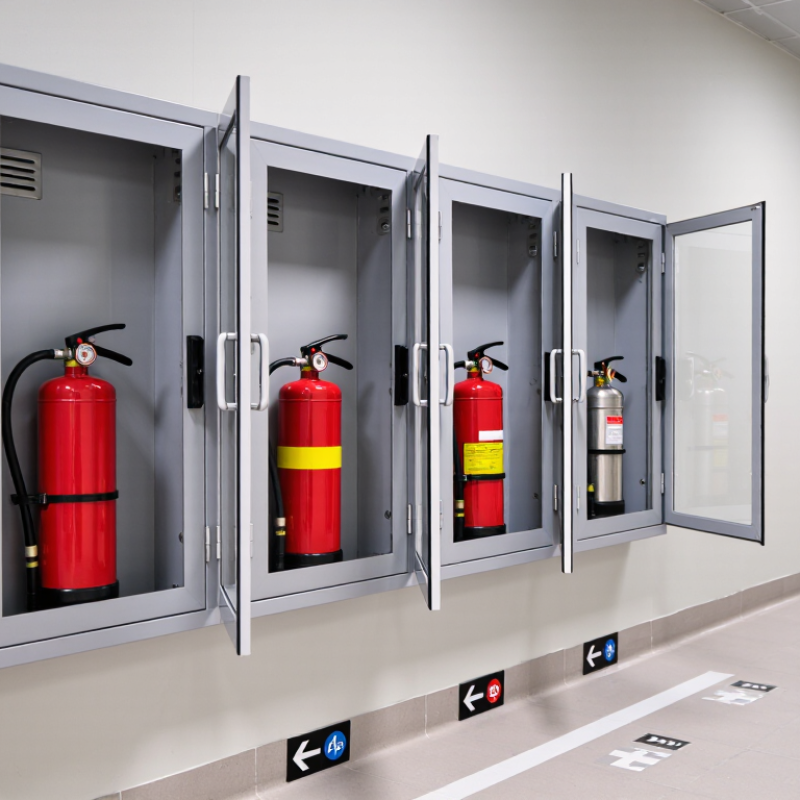
How to Choose the Right Fire Extinguisher and Cabinet?

Identify the Fire Risks in Your Facility

How to Choose the Right Fire Extinguisher and Cabinet?

Identify the Fire Risks in Your Facility

Walk through each room and record likely ignition sources, fuels, and people at risk. Check electrical panels, cooking areas, workshops, storage rooms, and charging stations. A small office may face ordinary combustibles and energized equipment. A machine shop may also contain flammable liquids, metal dust, or welding sparks. These details determine the extinguisher class, rating, quantity, and location.

The National Fire Protection Association reported approximately 1.5 million fires in the United States during 2023. The same report recorded about 3,670 civilian fire deaths and 13,350 injuries. These figures show why a generic extinguisher plan is weak. OSHA 29 CFR 1910.157 requires employers to select extinguishers according to the anticipated fire type and workplace hazard. Document the assessment, but question it after every process change.

Look closely at the cabinet environment. A cabinet near a loading door may need protection from impact, moisture, and freezing temperatures. A recessed cabinet can improve traffic flow, yet poor visibility can delay access. Keep the handle visible, the path clear, and inspection labels readable. For cooking risks, use equipment rated for cooking-oil fires. For energized equipment, choose an appropriate nonconductive agent. Water is not suitable for every fire.

Do not place an extinguisher only where it looks convenient. Mark travel distances, confirm mounting height, and review access during drills. People may hesitate under stress. That human factor is often underestimated. Reassess risks when fuels, machinery, occupancy, or room layouts change. Converse with safety professionals and follow NFPA 10 guidance for selection and placement.

Match Extinguisher Types to Different Fire Classes

Choosing the right extinguisher starts with identifying the fire class, not selecting the largest cylinder. Class A covers wood, paper, cloth, and many plastics. Water or foam units are commonly suitable. Class B involves flammable liquids, such as gasoline or solvents. Dry chemical or carbon dioxide may work, depending on the listed rating.

Class C means energized electrical equipment. Use a non-conductive agent, and isolate power when safe. Never aim water at live equipment. Class D fires involve combustible metals and require a specialized dry powder. Class K fires involve cooking oils and fats. Wet chemical extinguishers are designed for this high-temperature hazard.

NFPA’s Fire Loss in the United States During 2022 report recorded about 1.5 million fires and roughly 3,790 civilian fire deaths. These figures show why early, correct action matters. A wrong agent can spread flames or create a dangerous reaction. I have seen cabinets filled with suitable extinguishers but placed behind stored boxes. That arrangement defeats the purpose.

Choose an extinguisher with a clear class rating and enough capacity for the hazard. Check the pressure indicator, seal, hose, and inspection tag regularly. Mount the cabinet where people can see it quickly, near an exit, but away from likely flames. Keep the door unobstructed. It sounds obvious. It is often missed.

OSHA guidance and NFPA 10 recommend selecting, installing, inspecting, and maintaining portable extinguishers according to the hazard. Local conditions still matter. A professional assessment is worthwhile when chemicals, machinery, or commercial kitchens are present.

Choose the Correct Extinguisher Size and Rating

Choosing the right extinguisher begins with identifying the fire hazard, not matching cabinet color. Class A ratings cover paper, wood, cloth, and many ordinary solid materials. Class B ratings address flammable liquids, while Class C ratings address energized electrical equipment. Cooking oils require Class K protection and careful placement near, but not above, heat sources. A mixed-risk area may need more than one extinguisher type.

Size and rating are related, but they are not identical. The rating shows tested firefighting capacity; weight mainly reflects agent quantity and handling demands. For example, a 2-A:10-B:C extinguisher has tested ratings for solid materials, liquids, and electrical hazards. A higher number can provide greater coverage, but only when the agent matches the hazard. Larger units may be difficult for some employees to lift or aim. Small is not always practical. Placement should keep handles visible and access clear during smoke, panic, or power loss.

During an inspection, verify the label, pressure indicator, tamper seal, hose, and inspection date. A trained professional should confirm required ratings, spacing, and cabinet placement for the site. Do not assume every extinguisher works for every fire. That assumption deserves correction. A cabinet may look suitable while its extinguisher rating is wrong. Recheck the choice after room use, equipment, or stored materials change.

How to Choose the Right Fire Extinguisher and Cabinet? - Choose the Correct Extinguisher Size and Rating
Fire Class Typical Fire Risk Recommended Extinguishing Agent Common Size and Rating Suitable Locations Important Limitations Cabinet Selection Considerations
A
Ordinary combustibles
Wood, paper, cardboard, cloth, rubber, and many plastics Water, foam, or multipurpose dry chemical 2-A to 4-A
Select the rating according to the hazard size, travel distance, and applicable fire code.
Offices, classrooms, corridors, storage areas, and general commercial spaces Do not use water or foam on energized electrical equipment or flammable liquids. Use a cabinet with enough internal depth and height for the extinguisher, hose, handle, and safety pin. Keep the front visible and unobstructed.
B
Flammable liquids
Gasoline, diesel fuel, solvents, paints, oils, and other flammable liquids Foam, carbon dioxide, or dry chemical 10-B:C to 40-B:C
Higher ratings are generally selected for larger liquid-fuel hazards.
Workshops, maintenance areas, fuel-handling areas, garages, and laboratories Water can spread a flammable-liquid fire. Foam may be unsuitable where electrical hazards are also present. Choose a corrosion-resistant cabinet in areas exposed to oil, chemicals, moisture, or temperature changes. Provide clear identification from the normal approach direction.
C
Energized electrical equipment
Electrical panels, computers, appliances, motors, and other energized equipment Carbon dioxide or dry chemical 5-B:C to 20-B:C
The required rating depends on the associated Class A or Class B fuel load.
Electrical rooms, server rooms, workshops, offices, and equipment areas Class C identifies an electrical hazard; it does not indicate a separate fire size. De-energize equipment whenever it is safe to do so. Avoid cabinets that restrict access to the handle or discharge nozzle. In sensitive equipment areas, consider an enclosure that limits dust and accidental impact.
D
Combustible metals
Magnesium, titanium, sodium, lithium, potassium, and metal powders or shavings A dry powder agent specifically listed for the metal involved Special-purpose units
Size and agent selection must be based on the specific metal, particle form, and process.
Metal-processing facilities, laboratories, machining areas, and manufacturing operations Ordinary water, foam, carbon dioxide, and general-purpose dry chemicals may react dangerously or fail to control the fire. Use a dedicated, clearly marked cabinet located close to the metal hazard. Protect the unit from contamination, moisture, and unauthorized relocation.
K
Commercial cooking media
Cooking oils and fats in commercial fryers, griddles, and cooking equipment Wet chemical agent Typically 2-A:K to 4-A:K
Select the size based on the fryer capacity and the appliance protection design.
Commercial kitchens, cafeterias, restaurants, and institutional food-service areas Do not use water on burning cooking oil. The appliance should also have a properly designed fixed suppression system where required. Install the cabinet where kitchen staff can reach it quickly without passing through the cooking hazard. Use materials and finishes suitable for grease, heat, and frequent cleaning.
A:B:C
Multiple ordinary hazards
Mixed risks involving combustibles, flammable liquids, and energized electrical equipment Multipurpose dry chemical 2-A:10-B:C to 4-A:60-B:C
A higher rating is not automatically better; match the unit to the actual hazard.
Offices, retail areas, workshops, warehouses, and general-purpose commercial buildings Dry chemical residue can damage sensitive equipment and requires cleanup after discharge. It may also reduce visibility during discharge. This is often a practical general-purpose option. Confirm that the cabinet accommodates the extinguisher diameter and mounting hardware without blocking the label.
Selection and installation note: The correct extinguisher depends on the fuel type, fire size, occupancy, travel distance, environmental conditions, and local fire-safety requirements. Extinguishers should be listed or approved for their intended use, mounted securely, kept accessible, and inspected and maintained at the intervals required by applicable regulations.

Select a Safe and Accessible Cabinet Location

A fire extinguisher cabinet should be easy to see, reach, and identify during stress. Choose a location near exits, stairways, kitchens, workshops, or other likely fire risks. Keep the cabinet on a clear travel path, but never place it where people could trip over it. Visibility matters more than decoration.

Mount the cabinet securely at a practical height, following local fire-safety requirements and the manufacturer’s instructions. The door should open fully without hitting furniture, equipment, or stored materials. Avoid locked cabinets unless the design meets applicable safety rules and provides rapid access. Clear signage helps, especially in smoky or crowded conditions. Keep the area well lit.

Think about the environment, too. Heat, moisture, dust, and corrosive chemicals can damage both the cabinet and extinguisher. A cabinet beside a leaking pipe may look convenient, but it is a poor choice. Check the handle, seal, pressure indicator, and cabinet condition during routine inspections. Do not assume a clean exterior means reliable protection. A common mistake is choosing the nearest wall without testing access during an emergency drill. Walk the route yourself. Can someone carrying equipment reach it quickly? Could a fallen box block it? If the answer is uncertain, the location needs reconsideration. Local requirements can vary, so a qualified fire-safety professional should verify the final placement.

Plan Inspection, Maintenance, and Replacement Procedures

Choosing the right fire extinguisher begins with identifying the hazard, not selecting the largest cylinder. Class A extinguishers suit ordinary combustibles, while kitchens, workshops, and electrical areas may require different ratings. Match the extinguisher to the risk and place it inside a clearly marked, accessible cabinet. Never hide it behind stored materials.

Inspection planning should be practical and consistent. Assign a trained person to check each unit monthly. The inspection should confirm its location, pressure gauge, safety pin, tamper seal, hose, label, and cabinet condition. Look for dents, corrosion, leaks, blocked access, or faded instructions.

The cabinet glass should open easily without creating sharp hazards. Record every inspection with the date, initials, and observed condition.

Our first checklist was too general. It missed cabinets blocked by temporary deliveries. That mistake mattered. A qualified technician should perform scheduled maintenance according to the extinguisher type, manufacturer instructions, and local requirements.

Replace units after serious corrosion, failed testing, damaged valves, unreadable labels, or repeated pressure loss. Do not rely on appearance alone. Keep service records, review incident history, and confirm that replacement equipment still matches the current hazard. Conditions change. A renovated kitchen, new machinery, or stored chemicals may require a different extinguisher rating and cabinet location. Test the plan during staff drills. Real access problems appear quickly.

FAQS

How do I choose the correct extinguisher rating?

Identify the fire hazard before choosing size or appearance. Class A covers paper, wood, cloth, and similar solids. Class B covers flammable liquids. Class C covers energized electrical equipment. Cooking oils require Class K protection. One type may not cover every risk.

Does a larger extinguisher always provide better protection?

No. The rating shows tested firefighting capacity, while weight reflects agent quantity. A higher rating may cover more area when correctly matched. However, some employees may struggle to lift or aim larger units. Choose practical protection, not the largest cylinder.

Where should a fire extinguisher cabinet be placed?

Place it near exits, stairways, kitchens, workshops, or other likely hazards. The travel path must remain clear. Do not place the cabinet where people could trip. Handles and signs should remain visible. Walk the route during a drill.

What makes a cabinet location unsafe?

Furniture, boxes, equipment, or stored materials may block access. A leaking pipe can expose the cabinet to moisture. Heat, dust, and corrosive conditions can damage equipment. A convenient wall is not always a safe wall. Recheck the location after room changes.

What should a monthly inspection include?

Check the location, pressure indicator, safety pin, tamper seal, hose, and label. Look for dents, corrosion, leaks, and unreadable instructions. Confirm that the cabinet opens easily. Record the date, initials, and observed condition. Appearance alone proves little.

Should fire extinguishers be locked inside cabinets?

Avoid locked cabinets unless they meet applicable safety requirements. Emergency access must be rapid. The door should open fully without striking nearby objects. Clear signage and good lighting help during smoke or power loss. Test access under realistic conditions.

When should an extinguisher be replaced?

Replace it after serious corrosion, failed testing, damaged valves, or repeated pressure loss. Unreadable labels also create a serious problem. A qualified technician should assess required maintenance. Replacement equipment must match the current hazard. Conditions change.

How should staff prepare to use extinguisher cabinets during an emergency?

Staff should know the cabinet locations and travel routes. Drills can reveal blocked paths, poor lighting, or difficult handles. Keep cabinets visible and never hide them behind deliveries. A previous checklist may miss temporary obstructions. That mistake deserves correction.

Conclusion

Choosing the right Fire Extinguisher And Cabinet begins with understanding the specific fire risks in your facility. Evaluate the materials, equipment, and work activities present, then match the extinguisher type to the relevant fire class, such as ordinary combustibles, flammable liquids, or energized electrical equipment. Select a suitable extinguisher size and rating based on the room layout, potential fire severity, and the people expected to use it. A properly rated unit should be easy to handle without sacrificing adequate protection.

The cabinet should be installed in a visible, clearly marked, and easily accessible location that is protected from damage while remaining close to potential hazards. Avoid placing it behind obstacles or in areas that may become blocked. Establish routine inspection and maintenance procedures to confirm that extinguishers are charged, undamaged, properly mounted, and within their service life. Replace equipment promptly when it is defective, outdated, or no longer appropriate for the facility’s changing risks.

Ethan

Ethan

Ethan is a seasoned marketing professional with a deep expertise in our company's innovative product line. With a passion for sharing knowledge and insights, he takes the lead in regularly updating our corporate blog, where he explores industry trends, product features, and effective marketing......