
Choosing an Extinguisher Cabinet is a practical fire-safety decision, not merely a design preference. The right cabinet keeps equipment visible, protected, and reachable during a stressful emergency. NFPA’s Fire Loss in the United States During 2023 report estimated more than 1.5 million fires nationwide. That figure gives every facility a reason to examine small safety details. A cabinet may look simple. Its placement and construction still matter.
This guide presents seven essential tips for selecting the right model. We will consider extinguisher size, cabinet dimensions, material, visibility, mounting height, access, and maintenance. A cabinet should fit the extinguisher without crushing its hose or blocking the operating handle. The door should open smoothly, even in a crowded corridor. Glass panels, clear labels, and strong contrast can reduce hesitation. NFPA 10, Standard for Portable Fire Extinguishers, emphasizes accessibility, inspection, and suitability for the hazard. These principles should guide cabinet selection, while local authorities and approved professionals confirm project requirements.
The U.S. Fire Administration identifies cooking as a leading cause of residential fires, based on its national fire-data analyses. Commercial kitchens, workshops, electrical rooms, and public corridors create different protection challenges. One cabinet cannot solve every problem. That is easy to forget. Weather exposure, vandalism, dust, and poor visibility can quietly weaken readiness. An attractive cabinet may still be poorly sized or difficult to maintain. The better choice balances protection, rapid access, durability, and routine inspection. Review the decision after installation. Real buildings change, and fire equipment must change with them.
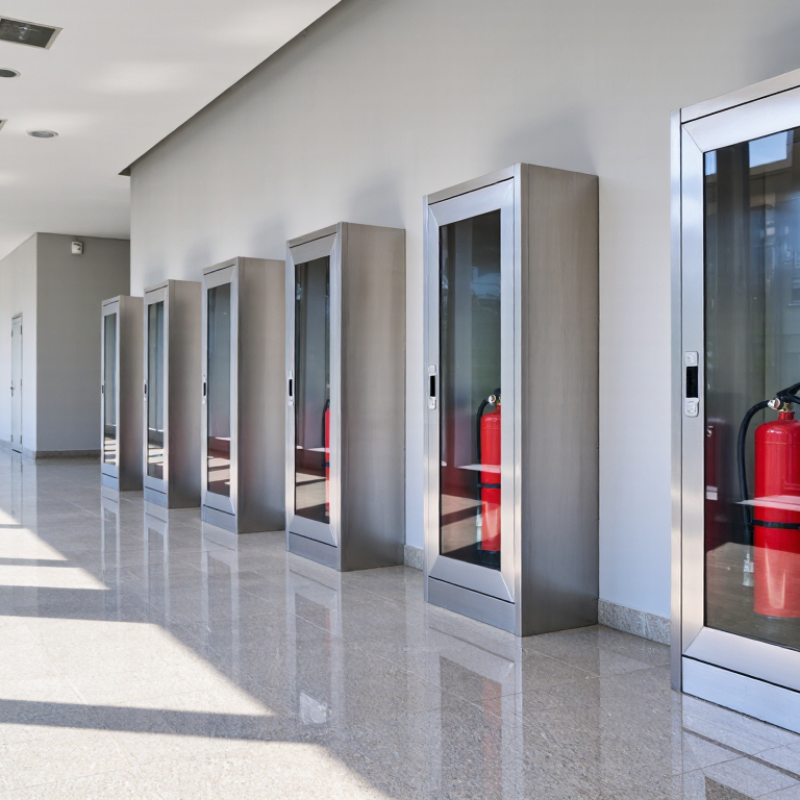
An extinguisher cabinet is a protective enclosure designed to store a fire extinguisher safely and visibly. It shields the unit from dust, moisture, impact, and accidental misuse. More importantly, it keeps emergency equipment easy to locate during a stressful moment. Seconds matter.
A suitable cabinet should match the extinguisher’s size, weight, and operating environment. Measure the interior clearance before buying, not only the extinguisher itself. The door should open quickly without special tools. Transparent panels can improve visibility, while clear signage helps visitors identify the equipment immediately. Avoid placing the cabinet behind furniture, equipment, or locked barriers. An attractive cabinet is not useful if someone cannot reach it.
Material selection also deserves careful attention. Stainless steel or coated metal may suit damp or exposed areas, while indoor spaces may need simpler protection. Check hinge strength, latch operation, ventilation, and wall support. Local fire requirements should guide mounting height and access conditions. These details can vary by building type and location. A common mistake is choosing appearance over maintenance. Dust can collect around the handle, and a tight cabinet can delay access. Inspect the enclosure regularly, confirm the extinguisher remains sealed and accessible, and replace damaged parts promptly. Even good planning needs review.
An extinguisher cabinet is a protective enclosure designed to store and identify a portable fire extinguisher while keeping it accessible during an emergency. The table below summarizes practical selection criteria based on common fire-protection requirements and recognized safety practices.
| No. | Selection Dimension | Recommended Specification or Data | Why It Matters | Practical Check |
|---|---|---|---|---|
| 1 | Confirm the Cabinet’s Purpose | Choose a cabinet intended for portable fire-extinguisher storage, with a clearly visible front and unobstructed access. | The cabinet should protect the extinguisher from damage, dirt, and unauthorized movement without delaying emergency access. | Verify that the extinguisher can be removed quickly without tools or complex procedures. |
| 2 | Measure the Extinguisher | Measure the extinguisher’s total height, cylinder or body diameter, hose or nozzle projection, and handle clearance before ordering. | Cabinet dimensions vary by extinguisher size and configuration. An overly tight cabinet can obstruct removal or damage the equipment. | Allow clearance around the extinguisher for insertion, removal, inspection, and maintenance. |
| 3 | Select the Installation Type | Use a surface-mounted cabinet where wall depth is limited; use a recessed cabinet where a flush appearance and suitable wall cavity are available. | The installation method affects available space, wall construction, appearance, and service access. | Check wall thickness, mounting surface, surrounding obstructions, and local installation requirements. |
| 4 | Match the Material to the Environment | Common options include painted steel for general indoor areas, stainless steel for corrosive or hygiene-sensitive locations, and impact-resistant transparent materials where visibility is important. | Moisture, salt, chemicals, impact, and temperature can affect cabinet durability and visibility. | Assess indoor or outdoor exposure, humidity, cleaning chemicals, salt air, and potential impact. |
| 5 | Prioritize Visibility and Identification | Choose a cabinet with a contrasting finish, a clearly marked extinguisher symbol, and a viewing window or transparent door where appropriate. | People must be able to locate the extinguisher quickly, and inspectors should be able to confirm its presence and condition. | Make sure signs are visible from normal approach routes and are not hidden by furniture, stored goods, or decorations. |
| 6 | Check Door and Access Features | Use a door that opens smoothly and provides full access. Break-glass or alarmed features should be selected only when permitted by the site’s safety plan and local requirements. | A cabinet must discourage tampering without creating a barrier during a fire emergency. | Test the door, latch, hinge, and any alarm or breakable-access feature during commissioning and inspections. |
| 7 | Verify Compliance and Maintenance Access | Select a cabinet compatible with the applicable building, fire-safety, accessibility, and extinguisher-maintenance requirements in the installation jurisdiction. | The cabinet does not replace required inspection, servicing, signage, clearance, or extinguisher-placement procedures. | Keep the area clear, inspect the cabinet regularly, and ensure the extinguisher remains charged, accessible, and within its service schedule. |
Start with the extinguisher label, not the wall space. Match the cabinet to the extinguisher class and hazard. Check the cylinder, hose, handle, gauge, and safety pin. A cabinet that fits only the cylinder is not enough.
Leave space for gloved hands and quick removal. The door must open without scraping nearby equipment. Avoid pressure on hoses, handles, or gauges. Measure twice.
Not always. Different extinguishers may require different depths, widths, or internal separation. Do not pack units tightly. Crowded storage slows retrieval and may damage equipment.
Place it visibly and within easy reach. Keep it away from leaking pipes, constant impacts, and blocked walkways. Check the mounting height, door swing, and local inspection requirements.
Stainless steel handles moisture well near entrances and wash areas. Outdoor cabinets may need weather resistance, drainage, and sunlight protection. Inspect coatings regularly. Small scratches can grow into corrosion.
Clear panels help people identify the extinguisher quickly. Use shatter-resistant glazing and strong hinges. Transparent panels do not replace hazard labels. Labels still matter.
Recessed cabinets save corridor space but require suitable wall depth and support. Surface-mounted cabinets are easier to retrofit. They may reduce walkway clearance. I once ignored wall thickness, and the installation plan changed.
Inspect the door, latch, glazing, anchors, and interior cleanliness. Confirm that access remains clear after renovations or heavier building use. Keep inspection records current. Conditions change. Recheck the original choice.
Choosing the right Extinguisher Cabinet is an important step in protecting people, equipment, and property during a fire emergency. A suitable cabinet keeps the extinguisher clean, visible, and ready for immediate use. Begin by matching the cabinet’s dimensions and mounting style to the extinguisher type, including its height, width, depth, and operating requirements. Select enough internal space for easy removal without excessive movement, while avoiding a cabinet that is unnecessarily large. The cabinet should be positioned along clear, accessible routes where occupants can quickly locate it, while remaining protected from obstruction, impact, moisture, and extreme heat.
For long-term protection, consider durable materials, secure construction, suitable ventilation, and a clear viewing panel or highly visible design. Labels, color contrast, and lighting can improve recognition in stressful conditions. Regular inspections should confirm that the cabinet, extinguisher, access area, and identification markings remain in good condition. Finally, verify that the cabinet and installation follow applicable safety standards and site requirements, and include routine maintenance in the building’s emergency preparedness plan.
