
A Fire Extinguisher Cabinet is more than a red metal box on a wall. It protects a portable extinguisher from dust, impact, moisture, and careless relocation. It also keeps the unit visible during a stressful emergency. Through a clear window, bold markings, and quick access, the cabinet reduces precious search time. It does not put out a fire by itself. That distinction matters.
The National Fire Protection Association reported approximately 1.5 million fires in the United States during 2022. Its NFPA 10 standard addresses extinguisher selection, installation, inspection, and maintenance. These requirements show why cabinet placement cannot be treated as decoration. A blocked doorway, missing inspection tag, or jammed latch can weaken an otherwise sound protection plan. Small details matter.
Lorraine Carli, NFPA’s Vice President of Outreach and Advocacy, has said, “The best way to survive a fire is to prevent it from happening in the first place.” Her statement places cabinets within a broader safety system. Prevention, detection, evacuation, and trained response must work together. A cabinet supports that system by making equipment identifiable and reachable.
This article explains how a Fire Extinguisher Cabinet works, what components it contains, and where it belongs. It also examines recessed, surface-mounted, and outdoor designs. Not every cabinet suits every environment. That is easy to overlook. Humid corridors, warehouses, kitchens, and public buildings create different demands. Proper evaluation still requires qualified professionals, manufacturer instructions, and applicable fire-safety standards.
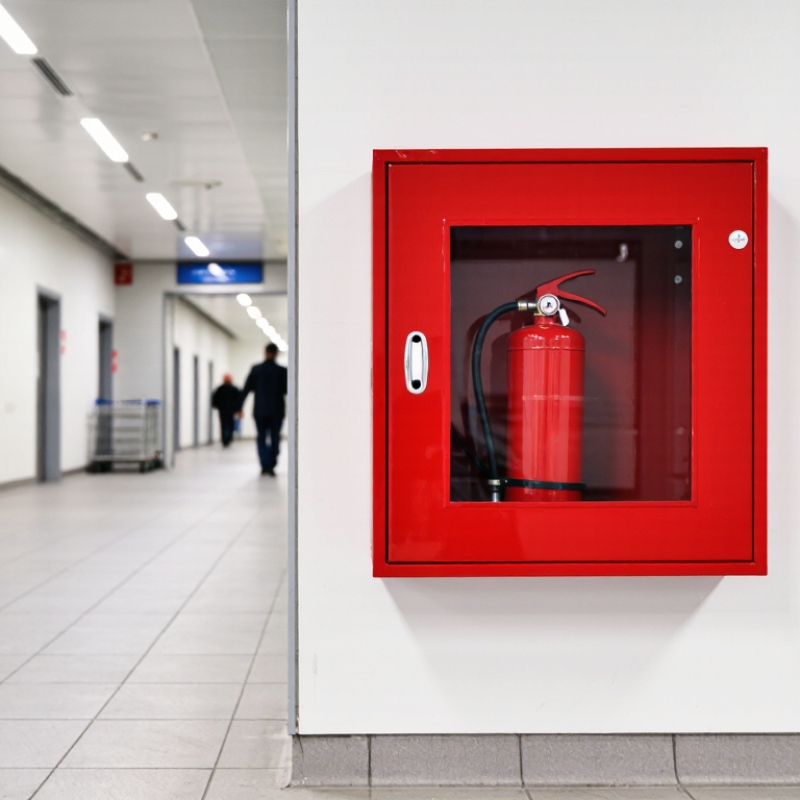
A fire extinguisher cabinet is a protective enclosure for a portable extinguisher. It keeps the unit visible, clean, and ready for emergency use. Most cabinets include a steel or impact-resistant body, a glazed or transparent door, mounting hardware, warning signage, and a latch or breakable access panel. The enclosure should not hide the extinguisher or slow removal.
Its purpose is practical. It protects the extinguisher from dust, moisture, accidental impact, and unauthorized handling. NFPA 10, Standard for Portable Fire Extinguishers, emphasizes proper accessibility, identification, mounting, and inspection. A cabinet supports these requirements, but it does not replace routine inspections. The extinguisher still needs the correct rating, pressure condition, seal, and service record.
Location matters greatly. OSHA guidance requires portable extinguishers to remain accessible and clearly identified in workplaces. NFPA’s Fire Loss in the United States During 2023 report recorded approximately 1.39 million fires and 3,670 civilian fire deaths. A cabinet cannot prevent every fire. It can reduce hesitation during the first critical seconds. The weak point is often human behavior. A locked, poorly marked, or crowded cabinet fails its purpose. That assumption deserves review.
A fire extinguisher cabinet is a protective enclosure built around a portable extinguisher. Its main purpose is simple: shield the equipment while keeping it visible and reachable. A durable door helps reduce damage from dust, accidental impact, and moisture. Clear glazing or a transparent panel lets people identify the extinguisher quickly. Good cabinets also use bold labels and sufficient lighting. During an emergency, every second matters.
Cabinet design must balance protection with access. The door should open smoothly without blocking nearby walkways. A recessed cabinet can save space in busy corridors, while a surface-mounted model may suit older walls. Mounting height and clearance should follow applicable safety requirements. The extinguisher must remain easy to lift, even for someone under stress. A cabinet that is too tight may protect the device but delay removal. That is a design failure. Routine inspections should check the seal, hinges, visibility, and any signs of corrosion. A clean appearance does not always mean reliable performance.
Tips: Keep the cabinet area clear. Do not use it for storage. Check that labels face outward and remain readable. Inspect the glass or viewing panel for cracks. If access feels awkward, ask a qualified safety professional to review the installation. Small details matter. Good design protects the extinguisher without turning it into a locked-away object.
A fire extinguisher cabinet is a protective enclosure that keeps an extinguisher visible, accessible, and ready for immediate use. It usually includes a clear door, mounting brackets, and identification signage. The cabinet does not put out a fire by itself. It protects the equipment from impact, dust, and accidental movement.
NFPA 10 travel-distance rules strongly influence cabinet locations. In many Class A, light-hazard areas, occupants should travel no more than 75 feet to reach an extinguisher. This distance is measured along the actual walking path, not through walls or across blocked spaces. A cabinet near an exit, corridor intersection, or common work area usually supports faster access. Keep doors, storage racks, and furniture from narrowing the route.
Visibility matters.
The cabinet should remain easy to spot during stress, smoke, or poor lighting. It should not be hidden behind decorations or used as general storage. A locked cabinet may delay emergency use unless approved emergency access features are provided. Exact placement still depends on hazard classification, extinguisher rating, building layout, and local authority requirements. A 75-foot layout can look correct on a drawing yet fail in the field. Walk the route with the floor occupied. Check every turn, doorway, and obstruction. This practical review often reveals problems that measurements miss.
| Data Dimension | Verified Information | Typical Planning Value or Rule | Cabinet Installation Consideration |
|---|---|---|---|
| Primary purpose | A fire extinguisher cabinet is an enclosure that protects and stores a portable extinguisher while keeping it visible and accessible. | Use the cabinet to improve protection from impact, dirt, tampering, and weather where applicable. | The cabinet must not delay access during an emergency or be used to conceal the extinguisher. |
| How the cabinet works | A door or break-glass panel provides controlled protection while allowing the extinguisher to be quickly seen and retrieved. | Select a cabinet with adequate internal clearance for the extinguisher, hose, handle, and operating instructions. | Do not block the door, obscure the sign, or place furniture and stored materials in front of the cabinet. |
| Class A hazard | Class A fires involve ordinary combustibles such as wood, paper, cloth, rubber, and many plastics. | Maximum travel distance: 75 ft (22.9 m) to an extinguisher. | Place cabinets along normal paths of travel, near exits, corridors, stairways, and other accessible points as determined by the hazard assessment. |
| Class B hazard | Class B fires involve flammable liquids and gases, including fuels, solvents, paints, and oils. | Travel distance depends on the extinguisher rating and hazard level; commonly specified limits are 30 ft, 50 ft, or 75 ft. | Locate cabinets close to liquid-use or storage areas, but outside spill, heat, and impact zones whenever possible. |
| Class C hazard | Class C fires involve energized electrical equipment. The extinguisher is selected according to the underlying Class A or Class B hazard. | There is no separate fixed Class C travel-distance table; apply the distance for the associated Class A or Class B hazard. | Do not install the cabinet where it can be exposed to electrical arcing, water discharge hazards, or restricted electrical clearances. |
| Class D hazard | Class D fires involve combustible metals such as magnesium, titanium, sodium, or potassium. | Travel distance is generally based on the specific metal hazard and the applicable extinguisher requirements; a 75 ft limit is commonly referenced for Class D placement. | Install near the metal-processing or storage area, using an extinguishing agent specifically listed for the metal involved. |
| Class K hazard | Class K fires involve cooking oils and fats, particularly in commercial cooking operations. | Place the extinguisher within the applicable travel-distance requirement for the cooking hazard and in accordance with the kitchen fire-protection design. | Install near the means of egress from the cooking area, away from the cooking appliances and where a fire could block access. |
| Maximum mounting height | Portable extinguishers must be mounted and located so they are readily accessible and available for immediate use. | For extinguishers weighing 40 lb or less, the top is generally no more than 5 ft above the floor; heavier units are generally limited to a 3.5 ft top height. | Measure the extinguisher position inside the cabinet, not only the cabinet’s exterior dimensions. |
| Bottom clearance | The bottom of a portable extinguisher should be positioned above the floor to reduce damage and maintain accessibility. | A minimum clearance of 4 in (102 mm) above the floor is commonly specified. | Use a shelf or mounting bracket that supports the extinguisher securely without preventing removal. |
| Visibility and signage | The extinguisher location should be identified and readily visible from normal approaches. | Use a contrasting cabinet, location sign, or directional marker where the extinguisher is not immediately visible. | Keep signs unobstructed and maintain visibility in corridors, warehouses, offices, and public areas. |
| Accessibility | An extinguisher must be accessible without excessive effort, special tools, or moving stored materials. | Maintain a clear approach and ensure the cabinet door can open fully enough to remove the extinguisher. | Avoid placement behind locked doors, inside obstructed rooms, or along routes that may be blocked during a fire. |
| Inspection and maintenance | Extinguishers require regular visual inspection, maintenance, servicing, and hydrostatic testing as applicable. | Inspect after installation, relocation, discharge, damage, or any event that may affect readiness. | Keep the cabinet clean, intact, clearly marked, and free of corrosion, broken glazing, or damaged hinges. |
| Code and site review | NFPA 10 provides portable extinguisher selection, distribution, installation, inspection, maintenance, and testing requirements. | The 75 ft value is not a universal rule for every fire class, extinguisher rating, or occupancy. | Confirm the final layout with the adopted local fire code, authority having jurisdiction, occupancy classification, and hazard assessment. |
Planning note: Travel distance is measured along the normal path of travel to the extinguisher, not as a straight-line measurement. The applicable edition of NFPA 10 and locally adopted requirements should be used for final design and approval.
A fire extinguisher cabinet stores and protects an extinguisher in a visible, reachable location. Its door or transparent panel helps prevent damage, dust, and accidental misuse.
Keep the area clear, and check the inspection tag, pressure indicator, seal, and hose regularly. The extinguisher must match the fire type. Never choose one by appearance alone.
If a small fire starts, raise the alarm and call emergency services when required. Use the extinguisher only when you have a clear escape route and feel able to act safely.
Remember PASS:
Pull the pin.
Aim the nozzle at the base of the flames, not the smoke.
Squeeze the handle slowly.
Sweep the nozzle from side to side across the fire’s base. Move closer only if the flames shrink.
Stay several feet away at first. Watch for reignition after the flames disappear.
If the extinguisher becomes empty, the fire spreads, or smoke blocks your exit, leave immediately. Do not open a hot cabinet carelessly, and never use water on electrical or flammable-liquid fires.
A common mistake is aiming too high. I still find that people rush the steps under stress, so practice matters. Read the cabinet instructions before an emergency, because layouts and extinguisher types can differ.
What Is a Fire Extinguisher Cabinet and How Does It Work?
A fire extinguisher cabinet stores and protects an extinguisher while keeping it visible and accessible. Its glass panel, door, and mounting position should not delay emergency use. Under OSHA 1910.157(e)(2), portable fire extinguishers require monthly visual inspections. This check is simple, but it must be consistent. A trained employee should confirm that the extinguisher remains in its designated location. The cabinet should be easy to open, clearly marked, and free from stored items or nearby obstructions.
Look for a present safety pin and an intact tamper seal. Check the pressure gauge, cylinder, hose, handle, and nozzle for damage, corrosion, leakage, or missing parts. Dust on the cabinet may seem harmless, but heavy buildup can hide warning labels or damage. A rushed inspection can feel complete while missing a slow leak. The person conducting the check should record the date, location, and any concern requiring correction. Records also help reveal repeated problems, such as blocked access or cabinet damage. Monthly checks do not replace required maintenance, servicing, or testing performed under applicable procedures.
Tips: Use a short checklist and inspect every cabinet from the same direction. Open the door when safe, then confirm the extinguisher can be removed smoothly. Never place boxes in front of it. If the gauge reading looks abnormal, the seal is broken, or the cylinder is damaged, remove the unit from service through qualified personnel. Small details matter.
OSHA 29 CFR 1910.157(e)(2) requires portable fire extinguishers to receive a visual inspection every month. This chart shows the minimum inspection frequency across a 12-month year.
Inspection focus: Confirm that the extinguisher is in its designated cabinet or location, is accessible and visible, has no obvious damage, and shows an available pressure indication where applicable. Record and correct deficiencies according to the facility’s inspection program.
It is a protective enclosure for a portable fire extinguisher. It keeps the unit visible, clean, and ready for emergency use. The cabinet usually includes a body, door, mounting hardware, warning signs, and a latch. Keep it clear.
It helps protect the extinguisher from dust, moisture, impact, and unauthorized handling. A transparent panel lets people identify the unit quickly. It cannot prevent every fire, but it may reduce hesitation during the first critical seconds.
Many cabinets use steel or impact-resistant materials. Common parts include a clear door, hinges, mounting hardware, signage, and an access latch. Some doors use a breakable panel. The design should not slow removal.
Install it where people can see and reach it quickly. Keep walkways, doors, and floor space unobstructed. Surface mounting may suit older walls. Recessed mounting can save corridor space. Height and clearance should follow local safety requirements.
A cabinet should not create a delay during an emergency. Avoid locks that require keys or complicated steps. A breakable access panel may provide protection while allowing fast entry. A locked cabinet defeats its purpose.
Confirm the extinguisher remains in its assigned location. Check the cabinet door, hinges, glass, labels, and mounting condition. Inspect the safety pin, tamper seal, gauge, hose, handle, and nozzle. Record the date and any problem found.
Report abnormal pressure, leakage, corrosion, damaged cylinders, missing parts, broken seals, or difficult removal. Qualified personnel should handle servicing or removal from service. A clean cabinet can still hide a slow leak.
No. Monthly visual checks support readiness, but they do not replace required servicing, maintenance, or testing. Records can reveal repeated issues, such as blocked access or damaged doors. The inspection may feel complete and still miss something.
A Fire Extinguisher Cabinet is a protective enclosure designed to store a portable fire extinguisher in a clearly marked, easy-to-reach location. Its main components typically include a cabinet box, door, viewing panel or signage, mounting hardware, and enough interior space for safe removal. The cabinet shields the extinguisher from dust, impact, moisture, and accidental interference while keeping it visible and accessible during an emergency. Cabinets should be installed along normal travel paths, near exits, and in other appropriate locations. Under NFPA 10 guidance, extinguisher placement should generally allow people to travel no more than 75 feet to reach the proper unit.
To use the extinguisher, first follow the PASS method: Pull the pin, Aim the nozzle at the base of the fire, Squeeze the handle, and Sweep from side to side. Only attempt to fight a small, contained fire with a clear escape route. The cabinet and extinguisher should also be inspected regularly. OSHA 1910.157(e)(2) calls for monthly visual checks to confirm that the extinguisher is present, accessible, properly mounted, clearly identified, and free from visible damage or obstruction.
