For global buyers, choosing a Cabinet Fire Extinguisher system is not just a matter of comparing prices. The cabinet, the extinguisher, and the installation setting must work together. A unit beside a bright factory doorway faces different demands from one in a humid loading bay. Small details matter: door clearance, latch strength, visibility, and room to remove the extinguisher quickly.
Fire-protection engineer William E. Koffel is a relevant technical voice in this field. In paraphrase, his risk-based approach points buyers toward matching fire protection to the hazard and building conditions, rather than judging it by appearance alone. This is a paraphrase, not a verbatim quotation. It is a useful distinction. A polished cabinet can still be the wrong choice.
This guide examines manufacturers through practical questions: What materials and finishes are offered? Are product specifications clear? Can buyers confirm extinguisher compatibility, installation requirements, and service support? A viewing window may help users identify the unit, while a secure, easy-opening door can matter during a response. Those details should be checked against the site and applicable local requirements; product claims alone are not proof of suitability.
Global purchasing adds another layer. Lead times, replacement parts, documentation, and communication can shape the long-term value of a supplier. Not every manufacturer serves every market equally well. The comparisons ahead are intended to help buyers assess options carefully, ask better questions, and choose a cabinet that suits real operating conditions.
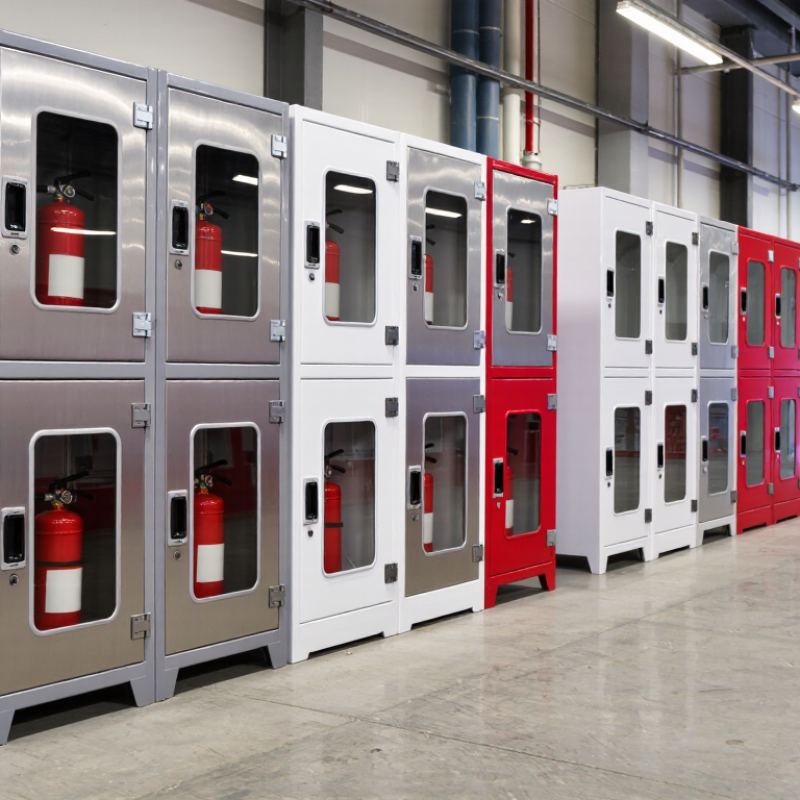
What Cabinet Fire Extinguishers Are and How They Work
A cabinet fire extinguisher is an extinguisher stored inside a wall-mounted enclosure. The cabinet keeps the unit visible and helps protect it from dust, bumps, and accidental interference. Some cabinets have a clear front; others use a door or breakable panel. The enclosure itself does not put out fires. It provides a designated place for the extinguisher, so people can locate it quickly. That distinction is easy to overlook.
During an emergency, the user opens the cabinet, removes the extinguisher, and follows the operating instructions printed on its label. The extinguisher releases an agent that helps control a fire suited to its rating, such as one involving ordinary combustibles or flammable liquids. The correct type depends on the hazards nearby. Keep the cabinet unobstructed, clearly marked, and easy to open; a locked or blocked unit may be useless when seconds matter. Check the cabinet door, mounting, access, and extinguisher inspection status during routine safety checks. Small details matter. A cabinet placed too high or hidden behind stored items can slow access, even when the extinguisher inside is fully serviceable. Fire risks vary, so placement and equipment choices should be reviewed by a qualified safety professional.
Types, Applications, and Essential Product Features
Cabinet fire extinguishers are available with different agents for different fire risks. Water-based units suit ordinary materials such as paper and wood, while carbon dioxide models are often selected for electrical equipment. Dry chemical extinguishers cover several common hazards, and wet chemical units are designed for cooking-oil fires. The right choice depends on the room, nearby materials, and equipment—not simply the cabinet size. Small details matter.
A cabinet in a factory corridor may need a corrosion-resistant finish and a clear viewing panel. In a commercial kitchen, quick access and a suitable extinguisher type matter more than appearance. Check that the door opens easily, the unit fits securely, and labels remain readable under local lighting. A cabinet that blocks access or hides instructions can slow response.
When evaluating manufacturers, global buyers can request material specifications, pressure-test records, quality-control information, and clear maintenance guidance. Confirm that the cabinet suits the intended wall or recessed installation and the site’s temperature and humidity. Ask about replacement parts and service support in the destination market. One point deserves a second look: a polished finish does not prove durability. Product documentation and practical inspection tell a more useful story.
Standards and Certifications for International Markets
For global buyers, certification is not a decorative mark on a cabinet door. It shows that a specific extinguisher model has been assessed against defined requirements. In many European markets, EN 3 is a key product standard; other regions may require different national approvals. Requirements can cover fire performance, operating instructions, labels, and construction. Details matter. A certificate for one model or capacity may not cover every product in a supplier’s catalogue.
During supplier reviews, check the certificate number, issuing body, validity, and exact model designation. Ask for current test reports and confirm that the testing laboratory is appropriately accredited. ISO 9001 can indicate a documented quality-management system, but it does not replace product certification. The cabinet and extinguisher may also be assessed under separate requirements. That distinction is easy to miss.
Labels should remain readable after shipping, and instructions should use the languages required in the destination market. Buyers should also verify that replacement parts and service guidance are available locally. Documents can look complete while leaving practical questions unanswered. Not always. A careful review connects each claim to the delivered unit, its marking, and the records supplied with the order.
How to Evaluate Cabinet Fire Extinguisher Manufacturers
Choosing a cabinet fire extinguisher manufacturer takes more than comparing prices. The enclosure must fit the specified extinguisher, remain visible, and open quickly without tools. Check door clearance, mounting strength, corrosion resistance, and performance in the intended setting, such as a damp loading bay or dusty workshop. Ask for material specifications, dimensional drawings, inspection records, and traceability for production batches. Small details matter. A latch that sticks can delay access; a window that clouds can hide the extinguisher. Ask how the manufacturer verifies these details, not only how they describe them.
Use independent data to frame the decision. The National Fire Protection Association’s report, Fire Loss in the United States During 2023, estimates 1.39 million fires and $23.2 billion in direct property damage across the country. Those figures cover many kinds of fires, not cabinet failures, but they underline why equipment readiness deserves scrutiny. Compare samples under realistic site conditions, and confirm compatibility with the extinguisher models and local requirements. Review applicable product certifications and quality-management documentation, while checking that certificates match the actual product and factory. A low-cost cabinet can still be a costly weak point. Honestly, paperwork alone cannot show whether a door will open smoothly after years of use.
Top Cabinet Fire Extinguisher Manufacturers for Global Buyers: How to Evaluate Cabinet Fire Extinguisher Manufacturers
Check that a cabinet accommodates installation within NFPA 10 mounting limits. The chart shows the maximum height to the top of a portable extinguisher, based on its weight.
NFPA 10 also specifies that the bottom of a portable extinguisher should be at least 4 inches above the floor. Confirm applicable code requirements for your project and location.
Leading Manufacturers and Global Sourcing Considerations
Global buyers evaluating cabinet fire extinguisher manufacturers should compare more than unit price. Start with the installation environment. A coastal warehouse may need corrosion-resistant finishes, while a busy corridor benefits from a clear viewing window and quick access. Measure the extinguisher, mounting height, wall clearance, and door swing before approving a drawing. Small details matter.
Ask suppliers for material specifications, dimensional drawings, finish options, and inspection records. Confirm that product documentation matches the destination market’s applicable requirements; do not assume one certificate covers every country or project. Request a pre-production sample when dimensions or color are critical. Check hinges, locks, edges, and labels in person. They reveal practical quality.
Sourcing decisions also depend on communication and delivery. Clarify packaging, lead times, spare-part availability, and how defects are handled. A factory’s quality process should include repeatable checks, not only a final visual review. Compare quotations using the same specification, or low prices can hide missing features. Not always. Even a careful checklist can overlook site conditions, so have the installer review the cabinet layout before placing a large order. The overlooked corner can be costly.
Conclusion
A Cabinet Fire Extinguisher is a fire-safety device housed in a protective cabinet for clear visibility and quick access. Its operation depends on the extinguishing agent and system design, so buyers should match the product to the fire risks, setting, and expected users. Options vary by agent, capacity, installation style, and intended application, while practical features may include durable construction, clear instructions, easy access, and straightforward inspection.
For international sourcing, buyers should check that products meet the standards and certification requirements relevant to their destination markets. Comparing manufacturers involves reviewing product specifications, quality-control practices, testing documentation, production capacity, customization options, and after-sales support. A careful assessment of shipping, communication, lead times, and supply continuity can also help global buyers select a suitable manufacturer and build a reliable procurement plan.