1. Executive Summary: The Critical Role of Biosafety Cabinet Hoods in Modern Science & Industry
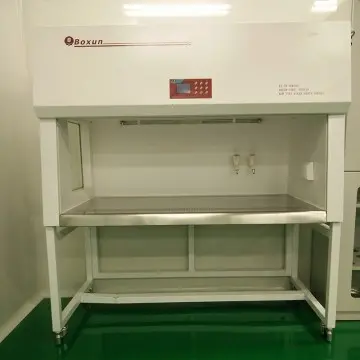
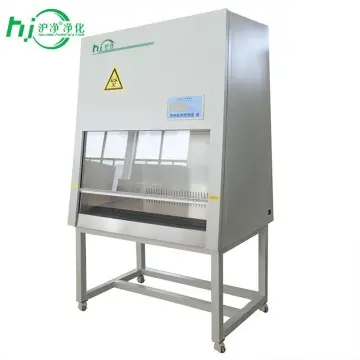
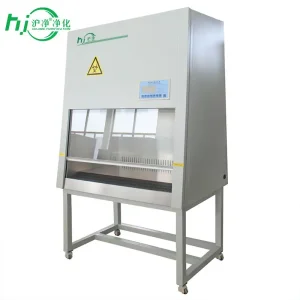
In modern scientific research, bio-containment serves as the foundational wall dividing hazardous airborne pathogens from research personnel and the external biosphere. The Biosafety Cabinet (BSC), colloquially known in laboratory design as a biosafety cabinet hood, is not merely general-purpose lab furniture; it is a class-certified, dynamically engineered containment enclosure. Its primary objective is to protect operators, the immediate environment, and delicate research specimens from particulate contamination and hazardous bio-aerosols.
As global demand grows for biotechnology, advanced drug discovery, virological surveillance, and genomic therapeutics, laboratory managers face critical decisions. Sourcing biosafety cabinet hoods directly from specialized manufacturing suppliers guarantees the procurement of equipment built to withstand strict containment testing. Over-engineered safety factors, dynamic air curtains, micro-processor control setups, and certified HEPA/ULPA filtration stages represent the baseline of modern biological safety cabinet hoods, shielding users in BSL-1, BSL-2, BSL-3, and BSL-4 facilities.
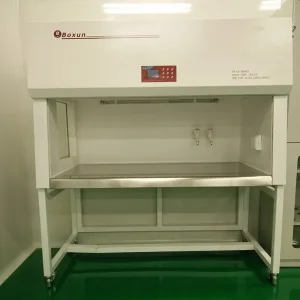
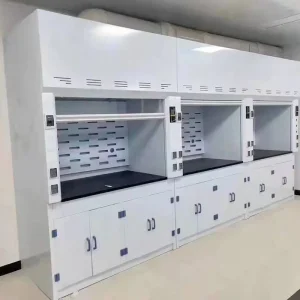
Information Gain Insight: Unlike conventional fume hoods designed solely for chemical vapor extraction, biological safety cabinets feature complex laminar airflow regimes that recirculate clean air through internal HEPA/ULPA filters, maintaining both operator safety and product protection.
2. Global Enterprise Procurement Dynamics: Demands, Specifications & Standards
Sourcing biological safety cabinet hoods at a corporate scale involves navigating a maze of regulatory requirements, physical footprint configurations, and total cost of ownership (TCO) assessments. Industry buyers represent different demands:
Pharmaceutical Enterprises & CMOs: These operations require strict compliance with GMP guidelines. They prioritize validation support (IQ/OQ/PQ), automatic sash controls, chemical-resistant finishes (316L stainless steel chambers), and seamless cleanroom integration with local HVAC systems.
Clinical Diagnostics & Healthcare Laboratories: High-throughput testing requires ergonomic designs, low noise emissions (under 60 dBA), easy-to-clean structures, and active air pressure differential monitoring to ensure a continuous safety barrier for operators handling hazardous bloodborne samples.
Academic and Biotechnology Startups: These buyers balance regulatory safety compliance with budget limitations. They seek high-performance Class II Type A2 cabinet models that provide cost-efficient air recycling, reducing HVAC load, while avoiding compromise on filtration ratings.
To ensure international compliance, professional factory suppliers align their production lines with standard test methods, specifically:
- EN 12469: The European harmonized standard outlining performance criteria for microbiological safety cabinets.
- NSF/ANSI 49: The North American benchmark detailing design, materials, and certification tests for Class II biosafety cabinets.
- YY 0569: The highly rigorous Chinese standard for biological safety containment hoods.
3. Macro Industry Solutions & Laboratory Cleanroom Integration
A standalone biosafety cabinet is only as effective as the room in which it is installed. In modern laboratory planning, macro-level engineering solutions integrate these cabinets directly into the room's overall environmental control systems. Correct air balancing prevents air turbulences at the cabinet's front sash, which could compromise the dynamic air barrier.
Experienced manufacturers offer technical support to match cabinet types with complex duct designs. For instance, a Class II Type B2 cabinet, which exhausts 100% of its air, requires close integration with the facility's exhaust fan and supply air systems. If the external exhaust fan fails, the cabinet's internal blower must shut down automatically to prevent positive pressure inside the work zone. Working with a factory supplier guarantees access to these tailored technical integration systems, ensuring all components communicate via Modbus or BACnet protocol systems.
4. Technical Roadmap & Future Innovations
The safety cabinet sector is shifting from basic mechanical control toward smart, AI-driven automation. Below are the key technological advancements shaping the next generation of biosafety hoods:
Electronically Commutated Motors (ECM Blowers): Traditional AC motors suffer from voltage fluctuations and generate heat, which speeds up filter degradation. Modern factory-configured hoods feature advanced ECM blowers. These motors automatically adjust speed to maintain constant airflow velocity as the HEPA filter loads over time, extending filter lifespans by up to 150% and cutting power usage.
IoT Integration & Smart Sensors: Next-generation hoods feature real-time sensor arrays that track inflow velocity, downflow velocity, sash height, and filter health. This telemetry data is streamed directly to laboratory management software, enabling predictive maintenance schedules and triggering alarms before safety limits are breached.
Advanced Sustainable Materials: Premium manufacturers are moving toward powder-coated surfaces enriched with antimicrobial additives and low-degassing materials. These choices protect the cabinet body from wear caused by aggressive VHP (Vaporized Hydrogen Peroxide) sterilization and harsh chemical agents.
5. Global Commercial & Industrial Status
The biological safety cabinet market has transitioned from a specialized niche to a high-volume manufacturing sector. Rapid growth in the Asia-Pacific region, led by production hubs in China, has redrawn global supply chains. Factories equipped with advanced laser cutting, automated bending, and robot weld cells deliver exceptional quality matching European equivalents at competitive prices.
Consequently, global procurement offices regularly source from Chinese factories, balancing structural quality, delivery speed, and cost. Partnering directly with high-volume manufacturers allows buyers to customize dimensions, customize sash layouts, and select filtration brands, ensuring the equipment meets their specific clinical protocols.
6. Localization Support, Quality Assurance & Regulatory Compliance
For global lab operations, importing equipment is only the first step. Long-term reliability depends on local installation and certification support. Competent suppliers build strong partnerships with local testing and certification bodies to provide:
KI-Discus Containment Testing: Validating that the dynamic air barrier protects the user under actual laboratory draft conditions.
HEPA Filter Integrity Testing (PAO/DOP): Scanning filters for transport damage or installation leaks to verify that all air remains particle-free.
Certification Verification: Delivering full documentation for local regulators (e.g., FDA, EMA, local Environmental Health and Safety officers).
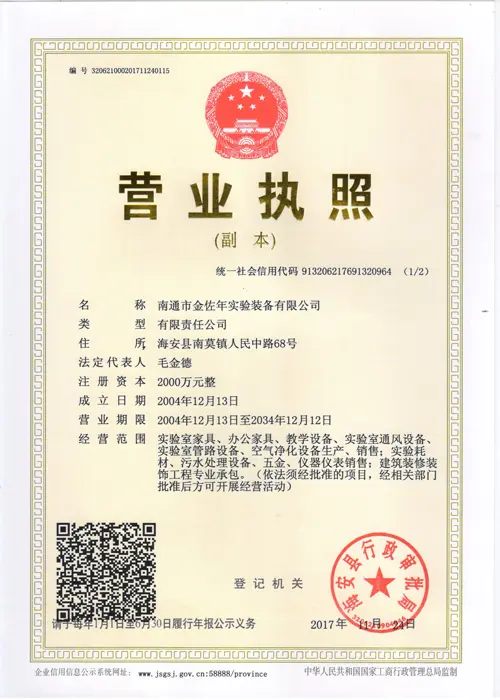
By choosing a certified supplier like Nantong Jinzonian Experimental Equipment Co., Ltd. (established in 2004 with a 10,000 M² factory footprint), enterprises gain access to quality control systems validated by ISO 9001 and ISO 14001 certifications.