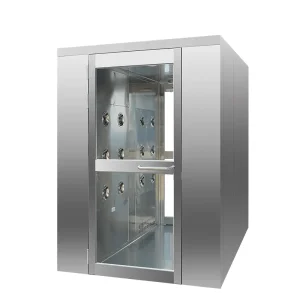
Direct from Nantong Jinzonian Factory — Engineered to conform with OSHA, ASHRAE 110, and EN 14175 standards.
As global industrial R&D accelerates in pharmaceuticals, chemical synthesis, semiconductor processing, and clinical pathology, the demand for high-integrity containment systems has grown exponentially. Standard ventilation systems are no longer sufficient to protect workers from volatile organic compounds (VOCs), hazardous chemical aerosols, and toxic airborne particulates. Today, a laboratory fume hood serves as the frontline engineering control parameter, managing both laboratory safety and HVAC energy efficiency.
Historically, procuring fume hoods meant balancing high costs against local safety certification requirements. However, the rise of advanced manufacturing centers, specifically in China, has redefined the procurement equation. By combining advanced materials science, automated robotic assembly, and stringent safety standards, manufacturers such as Nantong Jinzonian Experimental Equipment Co., Ltd. deliver enterprise-grade laboratory installations that match or exceed Western safety standards at a lower total cost of ownership (TCO).
The fundamental purpose of a lab fume hood is to prevent the escape of hazardous chemical agents into the open laboratory floor. To achieve this, fume hoods rely on the principle of Face Velocity. Face velocity is the speed at which air enters the hood opening (sash). Under OSHA and ASHRAE-110 guidelines, this must typically range between 80 and 120 feet per minute (fpm) or 0.4 to 0.6 m/s.
When sash heights are altered by operators, air volume must adapt. Modern installations utilize Variable Air Volume (VAV) systems. VAV systems adjust exhaust fan speeds via motorized dampers controlled by real-time sash position sensors. This maintains a steady face velocity while reducing energy waste by up to 60%, since exhausting conditioned indoor air is one of the single largest energy drains in modern facilities.
The chemical exposure profile of a laboratory determines the structural and interior lining materials required for fume hoods. Typical combinations include:
Established in 2004, Nantong Jinzonian Experimental Equipment Co., Ltd. is a high-tech enterprise specializing in the research, development, production, and sales of laboratory equipment. The company is headquartered in Nantong City, Jiangsu Province, covering an area of approximately 10,000 square meters, with modern production workshops and advanced production equipment.
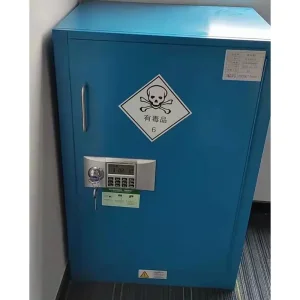
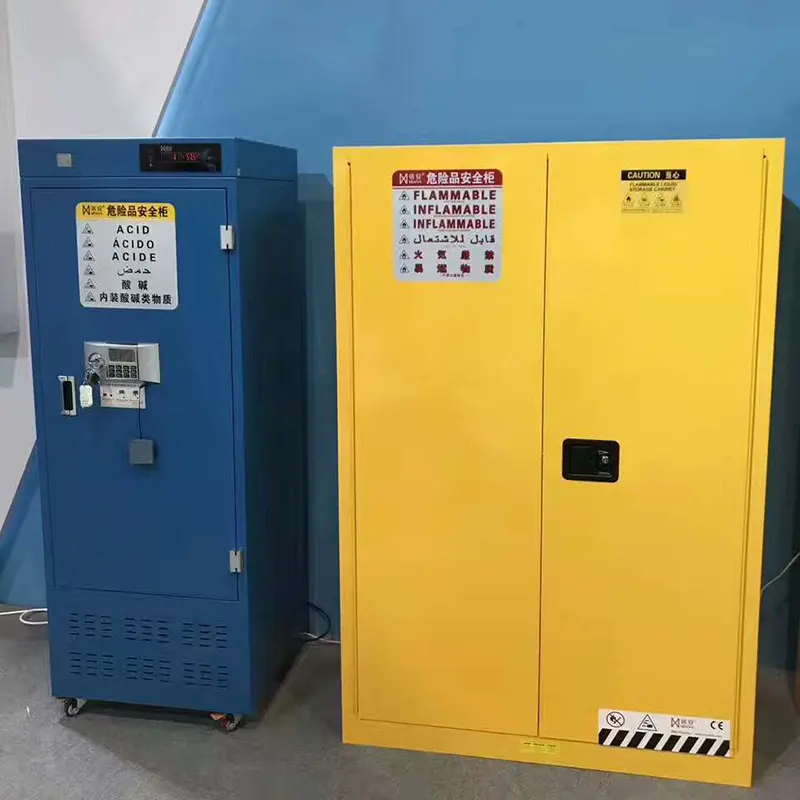
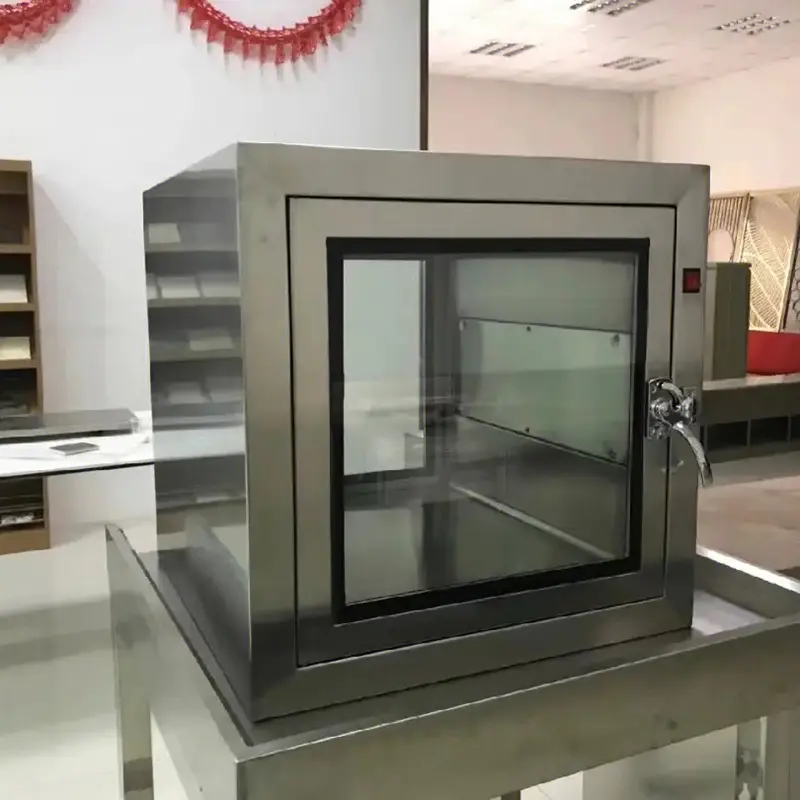
Our core catalog focuses on laboratory equipment, laboratory furniture, laboratory consumables, and specialized containment systems, widely used in medicine, chemical processing, bioengineering, and environmental protection.
Through decades of dedicated development, we have combined Chinese manufacturing efficiency with stringent compliance systems. Our products are exported to laboratories, universities, research institutions, and industrial plants worldwide, delivering custom solutions to demanding environments.

Why modern laboratory operators source their fume hoods and safety systems from specialized factories in Jiangsu.
Equipped with CNC laser cutters, automated multi-axis bending machines, and clean powder-coating systems, our factory delivers precise cabinet tolerances and durable surface finishes.
Being situated in the heart of East China's industrial zone provides us with immediate access to premium steel, high-purity polypropylene, and specialized laboratory fittings. This drastically lowers our material sourcing lead times.
Whether you require a custom width (from 900mm up to 2400mm), specialized internal liner materials, extra containment baffles, or custom cutouts for plumbing and electrical fixtures, our engineers can create tailored designs quickly.
Compare the engineering parameters of our primary product lines to make an informed choice.
| Equipment Category | Common Materials | Airflow Control Profile | Key Standard Compliance | Typical Applications |
|---|---|---|---|---|
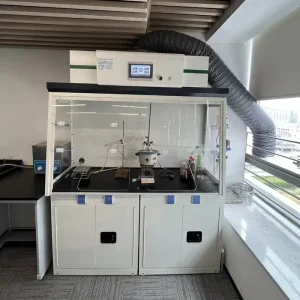
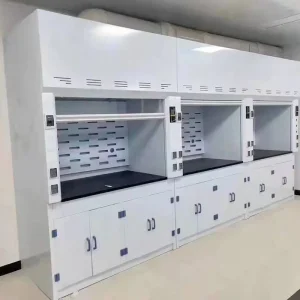
| Ducted Lab Fume Hood | Steel / Stainless Steel / PP / Phenolic Liner | Constant Air Volume (CAV) or Variable Air Volume (VAV) | ASHRAE 110, EN 14175, SEFA 8 | Organic chemical synthesis, toxic gas handling, acid digestions. |
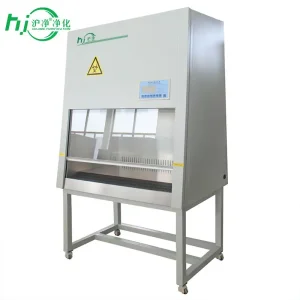
| Biological Safety Cabinet | Cold-rolled steel shell, 304 SS workspace | Recirculating HEPA-filtered laminar airflow (70% recur, 30% exhaust) | NSF/ANSI 49, EN 12469, ISO Class 5 clean air | Handling of pathogens, biological cell cultures, viruses, and clinical research. |
| Clean Workbench | All-Steel frame, acrylic or tempered glass sides | Horizontal or vertical unidirectional clean air stream | ISO 14644-1 Cleanroom Standard | Electronic assembly, non-hazardous pharmacy compounding, plant tissue culture. |
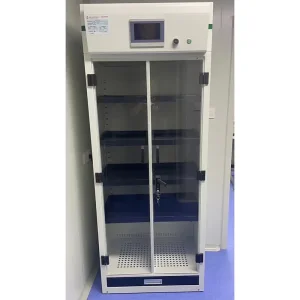
| Ductless Fume Hood | Steel / Acrylic / Polymer | Internal fan recirculating air through activated carbon & HEPA | SEFA 9, AFNOR NFX 15-211 | Light chemical processes, educational laboratories, classrooms. |
Jinzonian leverages high-tech R&D with ISO certifications to provide global industrial installations.

The company partners with top universities to develop high-quality products with independent intellectual property.

Jinzonian Company achieves ISO certifications, ensuring high product quality and global customer satisfaction.

Jinzuonian Company enhances capabilities to deliver superior products and services through core values.
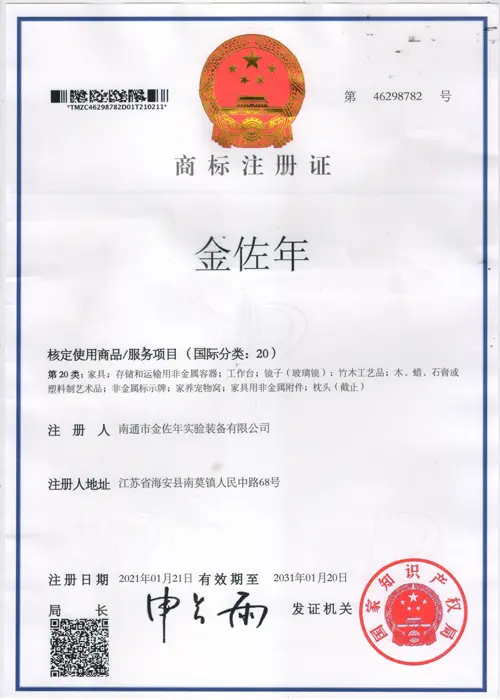
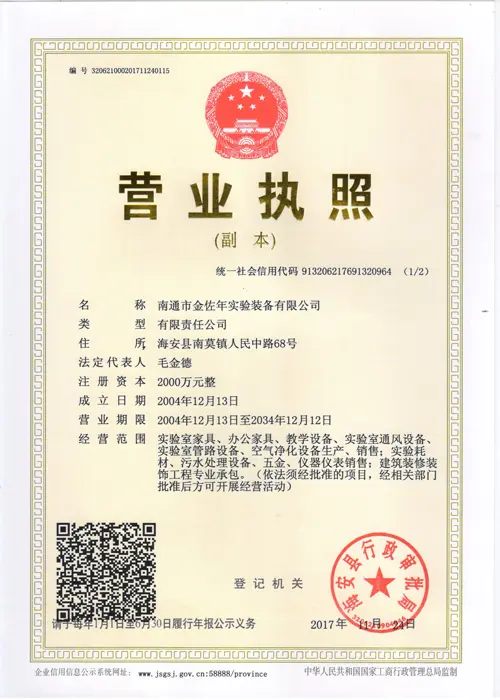
Excellence in laboratory design requires rigorous quality audits and certifications. Over the past decades, Jinzonian has established a robust track record of patents, international testing, and trademarks.
Company registration and initial infrastructure build in Nantong
Trademark Registration & Global expansion framework
Stay up to date with modern laboratory safety engineering trends and news directly from Jinzonian.
Get answers to common technical and logistical questions from our Senior Design Engineers.
The industry standard face velocity is generally 100 fpm (0.5 m/s), with acceptable limits ranging from 80 fpm (0.4 m/s) to 120 fpm (0.6 m/s) under ASHRAE 110 and OSHA guidelines. Slower speeds risk chemical escape due to drafts, while higher speeds can create air turbulence inside the hood, pulling fumes back toward the user's breathing zone.
Steel fume hoods, even when treated with high-grade epoxy finishes, will degrade over time when exposed to concentrated acids. Polypropylene fume hoods are manufactured with seamless, welded, chemical-resistant PP sheets, making them suitable for aggressive acid handling, such as trace metal analysis or hydrofluoric acid processes.
Ducted fume hoods draw air from the laboratory, sweep it across the work surface, and exhaust it directly outside the building via ductwork and a roof fan. Ductless fume hoods use an internal blower to draw vapors through built-in filters (HEPA for particles, activated carbon for gases) and return the purified air to the laboratory. Ductless systems are easier to install but require regular filter replacement and are not suitable for handling highly toxic or variable mixtures.
We operate under rigorous ISO 9001 and ISO 14001 quality management guidelines. Each unit undergoes structural testing, physical sash adjustment audits, and airflow visualization checks before crating. We use reinforced plywood crates to prevent damage during long-distance ocean shipping.
Yes. We provide complete OEM/ODM options. We can customize dimensions (such as custom depths and heights), partition styles, sink placement, gas fixtures, internal liners, and electrical panel designs to match your specific laboratory project drawings.
From clean workstations to specialized gas control cabinets, we manufacture the tools for modern science.